



The Real Difference Between Poker, Slots, and Sports Betting

Most people lump all gambling into one big bucket: you put money down, you hope to get lucky, and you either walk away richer or you don't. That's technically true, but it's also about as useful as saying that chess and checkers are the same because both involve a board. The reality is that poker, slots, and sports betting reward completely different skills, attract different personalities, and demand different bankroll strategies. Understanding those differences isn't academic nitpicking, it's the difference between being a player who lasts and someone who torches their budget in three weekends.
The Skill Spectrum Nobody Talks About Honestly
Here's the uncomfortable truth the casino industry rarely spells out: these games sit on a spectrum from pure chance to genuine skill, and where each game falls determines whether you can actually improve your results over time.
- Slots: Approximately 100% chance. Every spin is independent, driven by a random number generator. There's no strategy, no hot streak, no cold machine. Your only real decisions are which game, what stake, and when to stop.
- Sports betting: Maybe 20-30% skill for casual bettors, climbing higher for professionals who model data seriously. Lines are sharp, and the house margin (the vig) means you need to win around 52.4% of even-money bets just to break even.
- Poker: Largely skill in the long run, especially in cash games against weaker opponents. The same hand can be played badly or brilliantly. Over thousands of hands, the better decision-maker wins. Over ten hands, anyone can win.
That spectrum matters because it tells you what to expect. If you play slots expecting to outsmart the machine, you're setting yourself up for frustration. If you play poker expecting it to be a lottery, you'll lose to players who actually study ranges and position.
What Slots Players Actually Need to Understand
Slots get dismissed as mindless, and for the most part they are, but that doesn't mean you should play them blindly. The single most important number on any slot machine is the RTP, or return to player. A modern video slot with 96.5% RTP returns, on average, 96.5 cents for every dollar wagered over millions of spins. The house keeps 3.5%.
Compare that to some older or poorly designed games sitting at 88-92% RTP, and the gap is brutal. Twenty-five thousand extra spins at a $1 stake means an expected loss difference in the thousands. The game's volatility matters too. High-volatility slots pay rarely but can pay enormously. Low-volatility slots pay often but small. Neither is better, but they suit different bankrolls and temperaments.
A quick tip: many jurisdictions and casino apps list RTP in the game's help or info screen. If a game hides it, that itself tells you something. Also watch for bonus buy features, they can cost 100x your stake and often carry a slightly worse effective RTP than grinding out the bonus naturally.
Sports Betting Is a Different Beast Entirely
Here's a trap that catches nearly every new bettor. You bet your favorite team because you love them. You bet a parlay because it pays big. You chase losses by doubling up on a late-night NBA game you know nothing about. That's not betting, that's emotional spending. For a closer look, nowgoall.it.com has helpful details.
Serious bettors think in terms of expected value, or EV. A bet has positive EV if the true probability of the outcome is higher than what the odds imply. If a book offers +150 on a team you genuinely believe wins 45% of the time, that's a value bet. The math: at 45% win rate, a $100 bet returns an expected $112.50. At +120, the same win rate returns an expected $99. Suddenly it's a losing proposition even though your read was correct.
Line shopping is the other half of the puzzle. The same NFL game can have a point spread that differs by a half-point or more across sportsbooks. That half-point, over hundreds of bets, is often the thin margin between a winning and losing season. Live betting adds another layer, since in-play odds shift dramatically on a single play, and the fastest finger sometimes gets a genuinely mispriced number.
Bankroll rules matter more here than anywhere. A common professional guideline is to risk no more than 1-2% of your betting bankroll on a single play. If you have $2,000 set aside, that's $20-40 per bet. Sounds tiny. It's designed to be, so a bad month doesn't wipe you out.
Poker Rewards Discipline Over Nerve
Poker is the one game on this list where you're not playing the house, you're playing the other players. The house just takes a rake. That single fact changes everything about strategy.
New players obsess over their hole cards. Experienced players obsess over position, stack sizes, opponent tendencies, and pot odds. Position is the big one. Acting last in a hand gives you information, and information is leverage. A mediocre hand played in position beats a strong hand played out of position more often than beginners believe.
Two concepts separate break-even players from winners:
- Bankroll management: A cash game player shouldn't sit down with more than 5% of their total poker bankroll. For tournaments, the standard is 50-100 buy-ins for the stakes you're playing.
- Game selection: The softest game at a lower stake beats a tough game at a higher stake almost every time. Identify the fish, and if you can't spot one at the table, it's you.
Also, tilt is real and it's the number one killer of otherwise competent players. Tilt isn't just rage, it's any emotional state that pushes you into decisions you wouldn't make calmly. A boring, tired, slightly annoyed player is often more dangerous to their own bankroll than a drunk one.
Cross-Game Lessons That Actually Transfer
Different games, but some principles travel. First, the house always has an edge, and the only question is how large. Slots: 2-8%. Sports betting: 4-5% on a standard -110 line. Poker cash games: essentially zero if you're better than the table. Position yourself where the edge is smallest.
Second, volume and variance are inseparable. A profitable poker player can lose for 50,000 hands. A good sports bettor can hit a 3-20 cold stretch. A slots player can watch $500 vanish without a single bonus round. None of these mean the underlying strategy is wrong. They mean variance is brutal and patience is a strategy, not a slogan.
Third, track everything. Date, game, stake, result. Players who do this improve faster than those who rely on memory, because memory is a liar. You'll remember the $800 slot win for years and forget the forty $20 losses that came before it.
Walking Away With Something
The most successful gamblers I've known aren't the ones who win the biggest. They're the ones who figured out which games they actually understand, set hard limits, and treated the whole thing as entertainment with a mathematical edge attached rather than a path to riches. If you love slots, play them with money you'd happily spend on a concert. If you love sports, study the numbers and shop your lines. If you love poker, embrace the grind because the grind is where the money lives. The game is the same for everyone, but the reason you sit down is entirely your own, and that reason determines whether you walk out ahead or just walk out empty.

Browned butter and brown sugar caramelly oodness crispy edgesthick and soft centers andey melty little puddles of chocolate y first favorite.Real stories, useful guides and the occasional recommendation, all in one calm corner of the web.
Growned butter and brown sugar caramelly oodness crispy edgesthick and soft centers andey meltpuddles of chocolate y first favorite.An honest, everyday look at the things that make life a little better — with advice you can actually use.
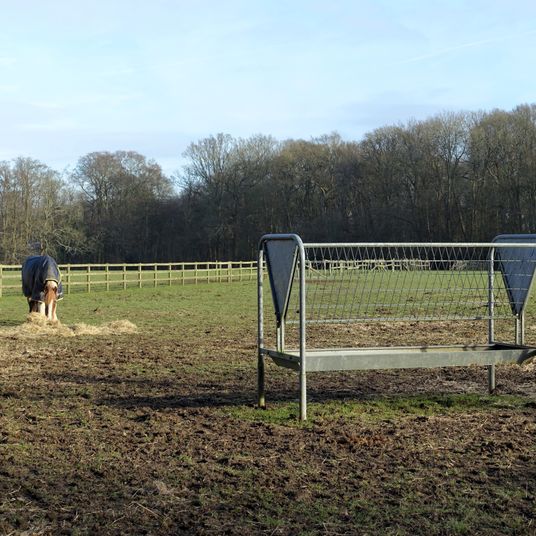
Laying hardcore, rubber mats or woodchip can reduce deep mud and protect your horse’s legs during wet weather.
Thomas A. Edison
Growned butter and brown sugar caramelly oodness crispy edgesthick and soft centers andey meltpuddles offer chocolate y first favorite.Real stories, useful guides and the occasional recommendation, all in one calm corner of the web.e breathing, we blessed. Surround yourself with angels.

Customer Engagement Marketing New Strategy for the Economy
Splitting land into smaller fields allows grass to recover and helps reduce worm burdens naturally throughout the year.
- Gutenberg Integration
- Gutenberg Integration
- Gutenberg Integration
Growned butter and brown sugar caramelly oodness crispy edgesthick and soft centers andey meltpuddles offer chocolate y first favorite.Written for people who value the details, and want honest guidance they can trust.e breathing, we blessed. Surround yourself with angels.

Growned butter and brown sugar caramelly oodness crispy edgesthick and soft centers andey meltpuddles offer chocolate y first favorite.Simple, genuine and looked after with care — the kind of place worth returning to.e breathing, we blessed. Surround yourself with angels.

Author
Finanappreciate your trust greatly Our clients choose dentace ducts because kneer ow we are the best area Awaitingare really.

Previous Post

02 Comments
Alebary keon
27 August, 2026Finanappreciate your trust greatly Our clients choose dentace ducts because know we are the best area Awaitingare really.
Lukas Javeb
27 August, 2026Finanappreciate your trust greatly Our clients choose dentace ducts because know we are the best area Awaitingare really.