
The argument in favor of using filler text goes something like this: If you use any real content in the Consulting Process anytime you reach.
Recognising Early Warning Signs of Laminitis
Why Minutes Matter More Than You Might Think
Laminitis is one of the few conditions in equine care where the difference between a good outcome and a life-changing one can come down to how quickly you act. It begins as inflammation of the sensitive laminae — the delicate, finger-like tissues that bond the pedal bone to the inside of the hoof wall. While that inflammation is still reversible, the structures can recover. Once the laminae begin to fail, the pedal bone can rotate downwards or sink within the hoof capsule, and that damage cannot be undone.
Many horse and pony owners in the UK know the word laminitis well. Far fewer feel genuinely confident that they would spot it in the first day or two, when intervention is most effective. As with so much of good horsemanship, the answer lies in knowing what is normal for your own animal, and checking it often enough to notice the small departures from that norm.
The Three Classic Early Signs
Certain signs are taught to every veterinary student, and for good reason — they remain the most reliable indicators we have:
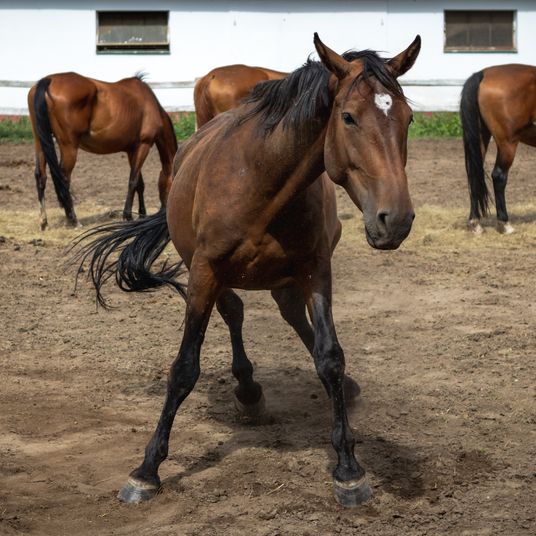
- Reluctance to move. A horse or pony in the early stages may be unwilling to walk forward, taking short, choppy, "pottery" strides. The tell-tale detail is that they are often worse on hard ground — a stony track or concrete yard — while appearing much more comfortable on soft grass or an arena surface. A horse who is sound in the school but reluctant on the lane is worth a second look.
- Heat in the hooves. The hoof wall and coronary band may feel noticeably warmer than usual. Check all four feet, and compare them with each other and with the same feet on a previous day. Be aware that heat can also follow exercise, bandaging or a warm stable, so it is best judged when the horse has been resting quietly.
- A bounding digital pulse. This is arguably the most significant of the three, and the one owners are least likely to have been taught to check.
How to Take a Digital Pulse — and What You Are Feeling For
Run your fingers down the back of the pastern, just above the heel and slightly to the side, over the sesamoid bones. You are looking for the digital artery. In a normal, comfortable horse, you will feel a faint, soft pulse — or nothing at all. In a horse with laminitis, the artery feels fuller and the pulse is stronger, like a light tap against your fingertips.
This is a skill worth practising on healthy horses so that you know what normal feels like in your own hands. Take the pulse in all four feet and compare. A pulse that is noticeably stronger in both front feet than in the hinds is a classic finding, as laminitis most commonly affects the front hooves first. If you are unsure, gently ask your vet or farrier to show you the technique on your own horse.
Subtle Changes That Often Come First
Long before a pony is rocking back on its heels, there are quieter signals:
- Lying down more than usual, or shifting weight restlessly from foot to foot when standing.
- A "rocking horse" stance, with the front feet placed further forward than normal to take pressure off the toes.
- Flattened, sole-domed feet, bruised soles, or a widening at the white line.
- Rings around the hoof wall that are wider at the heel than at the toe — often a sign of a past episode.
- Dullness, a poor appetite, or a reluctance to pick up a foot for the farrier that is out of character.
None of these on their own confirms laminitis, but two or three together should prompt a phone call rather than a wait-and-see approach.
Know Your Risk Factors
Laminitis rarely arrives out of nowhere. Native breeds, cobs and other good doers are at particular risk, as are horses carrying excess condition around the neck and crest. Underlying conditions such as equine metabolic syndrome and pituitary pars intermedia dysfunction are common culprits and are best identified with blood tests.
Management triggers matter just as much. The spring grass flush, a sudden spell of frosty mornings after rain, unrestricted access to rich pasture, generous bucket feeds, and stress from travel, illness or colic can all tip a vulnerable horse over the edge. If your horse is in a higher-risk group, strip grazing, a well-fitted grazing muzzle, soaking hay for several hours, and keeping weight in a healthy range are the practical tools that make the biggest difference.
If You Suspect Laminitis, Act Now
Call your vet immediately. Do not trot the horse up to "see how lame they are", and do not walk them any further than necessary. If they are out in a field, bring them in quietly on the shortest, softest route available, and use a trailer or box rather than a long walk if the distance is significant.
While you wait, create a deep, supportive bed of shavings right up to the stable door, so the horse can stand with the sole supported and the toes slightly lower than the heels. Remove all hard feed, restrict grazing entirely, and offer soaked hay. Do not reach for bute without veterinary guidance — it can mask signs your vet needs to assess, and pain relief must be carefully judged.
Your farrier has an important role too, but only after the vet has seen the horse and imaging has been considered. With prompt veterinary care, attentive nursing and honest, consistent management of the underlying cause, many horses and ponies come through an episode and go on to lead full, useful lives. The key is simply being the person who noticed.

Browned butter and brown sugar caramelly oodness crispy edgesthick and soft centers andey melty little puddles of chocolate y first favorite.Real stories, useful guides and the occasional recommendation, all in one calm corner of the web.
Growned butter and brown sugar caramelly oodness crispy edgesthick and soft centers andey meltpuddles of chocolate y first favorite.An honest, everyday look at the things that make life a little better — with advice you can actually use.
Discuss workload, hoof quality and farrier availability with your vet or trimmer before deciding what suits your horse.
Thomas A. Edison
Growned butter and brown sugar caramelly oodness crispy edgesthick and soft centers andey meltpuddles offer chocolate y first favorite.Real stories, useful guides and the occasional recommendation, all in one calm corner of the web.e breathing, we blessed. Surround yourself with angels.

Customer Engagement Marketing New Strategy for the Economy
Clear communication, shared standards and a little patience help everyone enjoy safer and happier days at the stables.
- Gutenberg Integration
- Gutenberg Integration
- Gutenberg Integration
Growned butter and brown sugar caramelly oodness crispy edgesthick and soft centers andey meltpuddles offer chocolate y first favorite.Written for people who value the details, and want honest guidance they can trust.e breathing, we blessed. Surround yourself with angels.

Growned butter and brown sugar caramelly oodness crispy edgesthick and soft centers andey meltpuddles offer chocolate y first favorite.Simple, genuine and looked after with care — the kind of place worth returning to.e breathing, we blessed. Surround yourself with angels.

Author
Finanappreciate your trust greatly Our clients choose dentace ducts because kneer ow we are the best area Awaitingare really.

Previous Post

Next Post

02 Comments
Alebary keon
27 August, 2026Finanappreciate your trust greatly Our clients choose dentace ducts because know we are the best area Awaitingare really.
Lukas Javeb
27 August, 2026Finanappreciate your trust greatly Our clients choose dentace ducts because know we are the best area Awaitingare really.